Multi-family dwellings, such as apartment complexes and condominiums, present unique challenges compared to single-family homes. These buildings often feature larger and more intricate roof structures, diverse tenant needs that require careful consideration during the project, and stringent local building codes that must be meticulously adhered to throughout the installation process.
Consequently, entrusting your multi-family roof installation to experienced and qualified professionals is of paramount importance. Proper installation is the cornerstone of ensuring the roof’s long-term longevity, effectively preventing leaks and potential structural damage, maximizing the building’s overall energy efficiency, and ultimately minimizing the likelihood of costly future repair expenses. Incorrect or substandard installation can lead to significant problems down the line, negatively impacting both tenant satisfaction and your property’s financial performance.
Key Considerations Before and During the Multi-Family Roof Installation Process
Pre-Installation Planning:
- Detailed Roof Assessment: Conduct a thorough inspection of the existing roof structure to identify any underlying issues like rot, structural weaknesses, or inadequate insulation.
- Roofing System Selection: Choose the most suitable roofing system based on:
- Building design (slope, architectural style)
- Budgetary limitations
- Local climate conditions (temperature variations, rainfall, wind)
- Material options:
- Asphalt shingles (various styles, durability grades)
- Flat roofing systems (TPO, PVC for low-slope roofs)
- Metal roofing (durable, energy-efficient)
- Permits and Approvals: Obtain all necessary permits and approvals from local authorities before commencing any work.
- Project Timeline: Develop a comprehensive and realistic project timeline to minimize disruption to tenants.
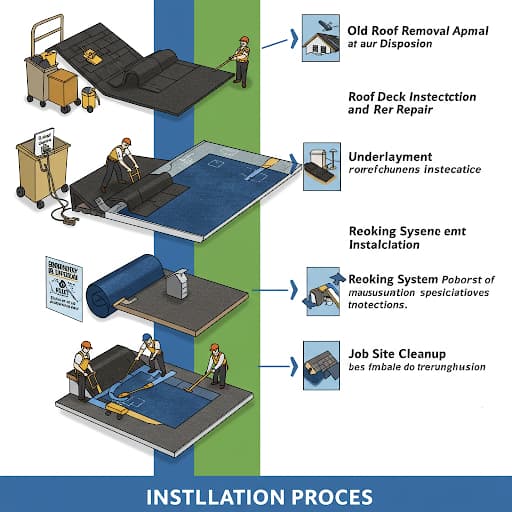
Installation Process:
- Old Roof Removal and Disposal: Carefully remove and responsibly dispose of the existing roofing materials according to local regulations.
- Roof Deck Inspection and Repair: Thoroughly inspect the underlying roof deck for damage and perform any necessary repairs or replacements.
- Underlayment Installation: Install underlayment precisely to provide a critical layer of moisture protection.
- Roofing System Installation: Accurately and meticulously install the chosen roofing system according to manufacturer specifications and best practices.
- Flashing Installation: Properly and securely install flashing around all roof penetrations (chimneys, vents, HVAC units) to prevent water leaks.
- Job Site Cleanup: Conduct a final, thorough cleanup of the entire job site, removing all debris and ensuring tenant safety.
Choosing the Right Roofing System and Selecting a Qualified Contractor for Your Project
Selecting the most suitable roofing system for your multi-family property involves considering various factors, including the roof’s pitch or slope, your budgetary limitations, aesthetic preferences, and the prevailing local climate conditions. Choosing the right roofing contractor is an equally critical decision.
Prioritize companies with extensive and verifiable experience specifically in multi-family roof installation projects, a strong and demonstrable track record of successful completed projects, proper and up-to-date licensing and comprehensive insurance coverage, consistently positive client testimonials and references, and clear, proactive communication throughout all phases, from the initial bidding process to project completion. It is highly advisable to obtain multiple competitive bids from different contractors and to carefully compare their proposals, paying close attention to the scope of work, materials specified, timelines, and overall cost. Property managers might even find it beneficial to consult with roofing contractors San Marcos, TX, for valuable insights into roofing materials and techniques that perform optimally in the regional climate.
Understanding Warranties, Selecting Quality Materials, and Minimizing Tenant Disruption
A crucial aspect of any roofing project is understanding the warranties provided. Reputable roofing contractors typically offer a workmanship warranty covering their installation labor, and material manufacturers provide separate warranties on the roofing products themselves. Carefully review the terms and conditions of both. Opting for durable, high-grade roofing materials from well-established manufacturers, even if they entail a slightly higher initial cost, will generally result in significantly lower long-term maintenance expenses and a considerably longer lifespan for your multi-family roof.
Installing a new roof on a multi-family building can inevitably cause some disruption to tenants. A professional and experienced contractor will work closely with property management to develop a detailed plan that effectively minimizes inconvenience to residents, provides clear and timely communication regarding the project timeline and any necessary access to individual units or common areas, and ensures a safe and organized work environment throughout the project.
Budgeting and Financing Options and the Importance of Post-Installation Maintenance
The financial investment required for a multi-family roof installation can be substantial. It is essential to develop a realistic and comprehensive budget that accurately accounts for all anticipated costs, including materials, labor, permit fees, and a contingency fund for potential unforeseen expenses. Explore available financing options if necessary, and carefully consider the long-term return on investment associated with a high-quality and properly installed roofing system. Even with the most meticulous installation, regular inspections and proactive preventative maintenance are critical for maximizing the lifespan of your multi-family roof and protecting your investment over time.
Schedule routine roof inspections by qualified professionals to identify and address any minor issues, such as loose shingles or small leaks, before they have the opportunity to escalate into more significant and costly problems, thereby ensuring the continued protection and well-being of your property and its residents.
Conclusion
Investing in a professionally executed multi-family roof installation is a fundamental step in safeguarding your valuable property and ensuring the long-term comfort, safety, and satisfaction of its residents. By carefully considering the unique demands inherent in these complex projects, diligently selecting the most appropriate roofing system and a highly qualified contractor, and fully understanding the critical importance of utilizing quality materials and implementing a program of ongoing maintenance, you can secure a durable and reliable roof that provides lasting value and robust protection for your investment for many years to come.
Just as diligent property owners research specific needs, such as roof repair Temple TX, a thorough and well-informed approach to new multi-family roof installations in Austin guarantees a sound and secure future for your property.